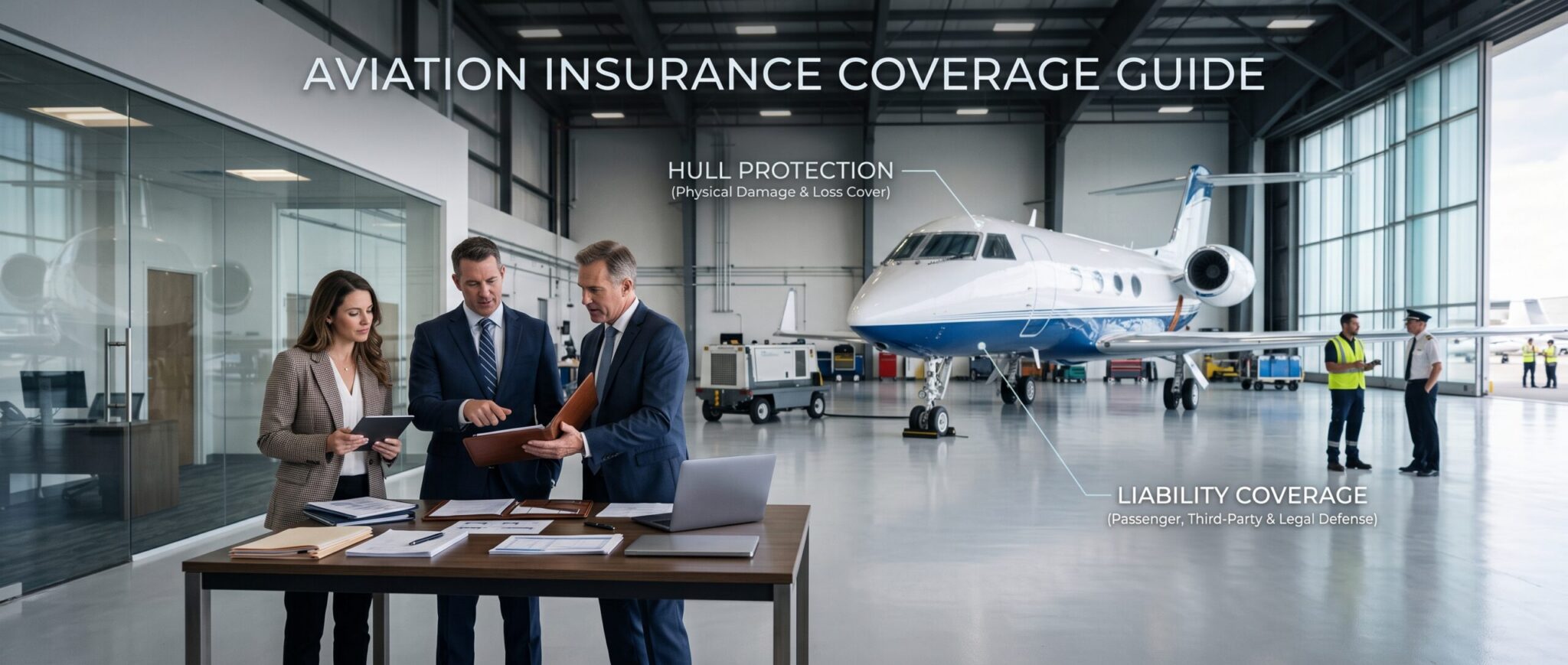
How to evaluate liability limits, passenger restrictions, assets, contracts, operations, and the options the market will actually offer.
The short answer
There is no single aircraft liability limit that is right for every owner or operator. The amount should reflect who is flying, who is riding in the aircraft, where and how it is operated, the property and people that could be affected, your financial position, and any limits required by contracts or lenders.
The decision also depends on what the aviation insurance market will offer. You may request a certain limit and receive a lower option, a passenger restriction, or additional pilot requirements to receive a higher limit.
My general advice is to review the highest meaningful options available and understand the price and conditions attached to each one. Do not choose a limit from the premium alone.
What aircraft liability coverage is designed to do
Aircraft liability coverage is intended to respond when an insured becomes legally responsible for covered bodily injury or property damage arising from the ownership, maintenance, or use of the aircraft. The policy may also provide investigation and legal defense for a covered claim, subject to its wording. Under most policies, legal defense costs are separate and not subject to the limit of liability.
The limit shown on the policy is not a statement of the largest possible loss. It is the maximum amount the policy makes available under the applicable coverage structure. The policy controls who is insured, which events are covered, how defense expenses are treated, and what exclusions apply.
Understand the structure before comparing the number
A policy may show an each occurrence limit and then place a lower limit on injury to each passenger or each person. For example, a total occurrence limit can look substantial while only a smaller portion is available for one passenger.
A smooth limit generally means the total occurrence limit is not divided by a lower passenger or person limit. Smooth coverage is not available for every aircraft, pilot, or operation, and the additional premium can vary significantly.
When comparing options, ask your broker to explain how much coverage could apply to one passenger, several passengers, people outside the aircraft, and property damage. The structure can matter as much as the headline number.
Consider who may be injured
Think about the people who normally travel with you. Family members, friends, employees, customers, and business guests can create different exposures and different insurance requirements.
Passenger waivers and releases may be useful parts of a broader risk plan, but they do not replace liability insurance and may not be enforceable in every circumstance. Legal advice should come from an attorney familiar with the applicable state law and aviation activity.
Also consider people on the ground. An aircraft loss can affect airport property, buildings, vehicles, other aircraft, or members of the public who never agreed to accept the risk of the flight.
Consider your aircraft and operation
Aircraft size, speed, seating, value, and typical mission all influence the exposure. A two seat aircraft used locally presents a different picture from a cabin class aircraft carrying business passengers across several states.
Flight schools, rental operations, charter operators, managed fleets, flying clubs, and businesses using aircraft in support of their work may need to evaluate several liability coverages, not just the limit attached to one aircraft. Contracts with airports, customers, management companies, aircraft owners, and vendors may also require specific limits or policy language.
Contract requirements should be reviewed before the agreement is signed. A certificate of insurance cannot create a limit or coverage that the policy does not provide.
Consider your financial position
Liability insurance is one part of protecting your financial position. Review the assets and income that could be exposed to a claim, the ownership entity, business relationships, and any indemnity obligations you have accepted.
Do not assume an umbrella policy or aircraft ownership entity protects you from an aircraft claim. Aviation exposures may be restricted or excluded, and an entity does not guarantee protection for every person involved. Ask for written answers and coordinate the insurance and legal review.
Ask the market for real options
The most useful comparison shows what the market will actually offer. Ask for alternative limits, smooth options when available, and the price difference between them.
If the preferred limit is unavailable, ask why. The answer may involve pilot experience, aircraft type, seating, use, claims, pilot and aircraft age, training, or current market appetite. Sometimes a stronger training plan or a different policy structure can improve the result. Sometimes the limit is simply not available for that risk.
A direct answer is more useful than a general rule. Liability decisions should be based on your operation and the terms available at that time.
Questions to review with your broker
● What aviation accounts do you handle most often
● What do you see as the main underwriting concerns with my risk
● Which insurance markets would you expect to approach
● Who will speak directly with the underwriters
● Who will handle my policy service questions
● How do you support clients during a claim
● When will you begin preparing for renewal
The point
The right liability limit is not a number selected in isolation. It is a decision about exposure, financial protection, passengers, contracts, policy structure, and available market capacity.
Your broker should show you the realistic choices, explain the restrictions, and help you understand what each option does and does not provide. You should be able to make the decision with the full picture in front of you.
“Ryan Aviation Insurance can review your liability structure, identify available options, and explain the questions to discuss with your legal and financial advisors.“
This article provides general educational information and is not a coverage determination or legal advice. Coverage varies by insurer, policy form, endorsements, aircraft, pilots, and operation. The issued policy and applicable endorsements control.